Carpenter in Chattanooga, TN: Wood Rot, Structure & Finish Work
Chattanooga Carpentry is a local residential carpentry shop serving homeowners across Chattanooga, East Ridge, Red Bank, Signal Mountain, and Lookout Mountain. We work on the full span of carpentry: wood rot and insect damage repair, structural framing and beam work, and finish carpentry from trim and doors to custom built-ins. If you are searching for a carpenter near me in Chattanooga, you are looking at a shop where the same carpenters show up to your job, know the local building stock, and take time to explain what they find.
The homes here span from Victorian and Craftsman stock built before 1920, to mid-century ranches, to newer construction spreading toward Ooltewah. Many sit over damp crawlspaces in the river valley, where humidity and termites have been working on sills, joists, and porch framing for decades. Others have settled unevenly over a century, leaving floors that slope and doors that stick. We know this building stock and the climate that shapes it, and we repair or replace the wood honestly.
Why Wood Fails in Chattanooga, and How We Read It
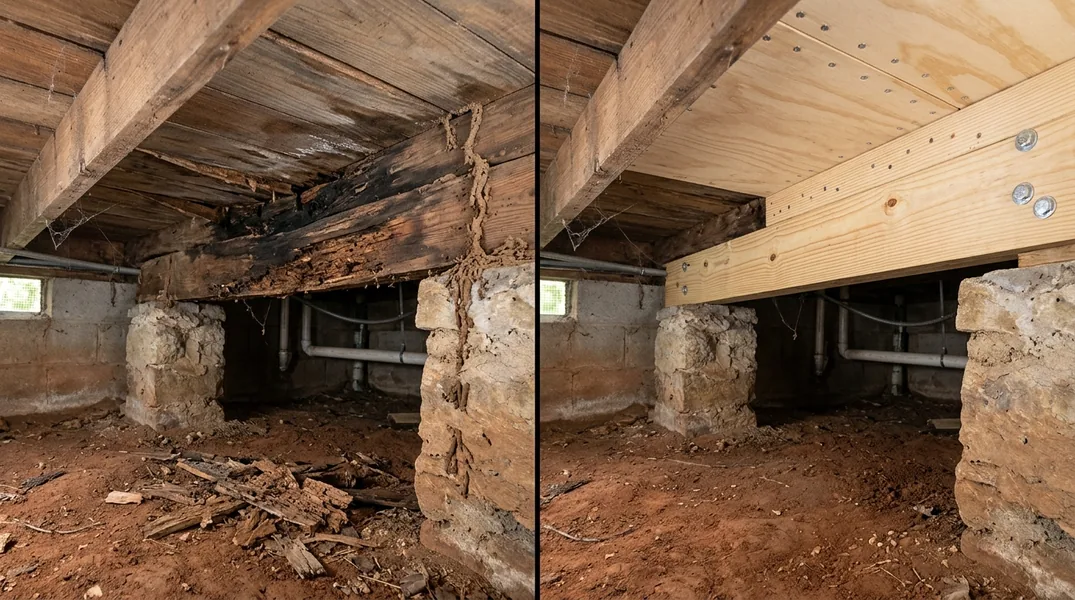
Wood fails in Chattanooga for two main reasons: moisture and insects. The Tennessee River valley keeps the air humid year-round, and rainfall spreads through every season. Sills, window frames, deck ledgers, and north-facing trim on wooded lots stay damp far longer than the wood prefers. This sustained moisture feeds dry rot, a fungus that softens wood from the inside while the surface paint film still looks sound. Wet rot settles into joints and end-grain where water pools, especially at thresholds and deck posts. Neither is a quick catastrophe, but both progress steadily if the water source is not closed. Eastern subterranean termites swarm every spring and hollow out framing from within, leaving a shell of paint and outer wood that feels solid until a probe pushes through.
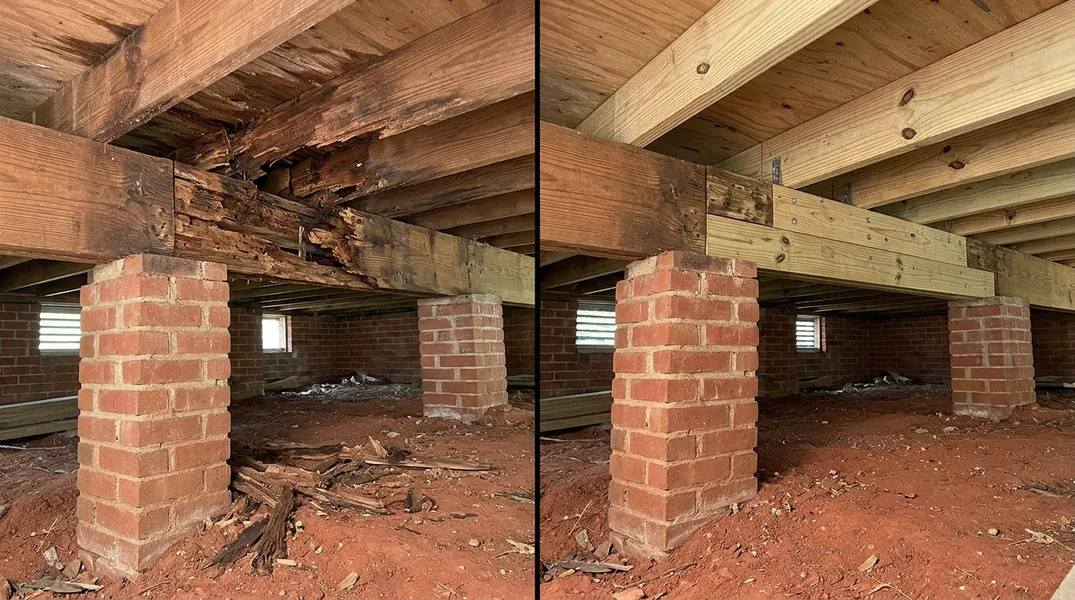
We assess rot and insect damage by probing to find where sound wood begins, examining the framing behind visible surfaces, and tracing the water path that fed the decay. Cosmetic surface softening on a member that is still structurally sound can be cut out and rebuilt with new wood, matched to the grain and profile. A member that has lost too much section gets replaced. The honest call is this: filler over rot is not a repair. If the water source is not closed, the damage returns. We work from your own pest inspection report when termites are involved. We repair and replace the damaged wood, but we do not perform pest treatment, fumigation, or extermination, which is a separate regulated trade. If you have found rot or damage, call (423) 395-1695 to schedule a free wood rot inspection, or reach out with photos and we can give you an honest read.
The cost difference between a repair and a replacement depends on how much sound wood remains, whether the water can be stopped, and what each option costs. We quote both when both are real options, and we explain why one makes more sense than the other. A sill plate that is 80 percent sound gets sistered or partially replaced. One that is 30 percent sound gets replaced entirely. The decision is not ours to make for you, but we make sure you understand it.
Structural Carpentry in Chattanooga: Joists, Beams and Settling
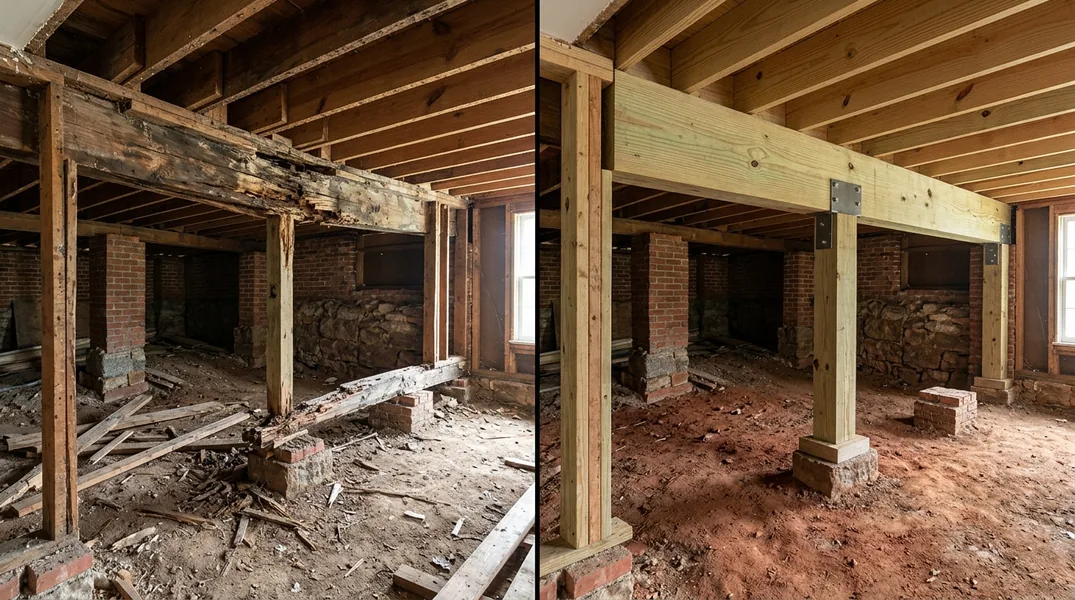
Structural carpentry in Chattanooga homes means working with floor joists, subfloor sections, sill plates, rim joists, and the beams and headers that carry loads. A floor that has gone soft or bouncy often means a joist or a subfloor section has taken on moisture or insect damage. We assess whether the member can be sistered (reinforced alongside a new joist) or needs to be replaced, and we do the work to bring the floor level and solid again. Sill plates and rim joists that have rotted are rebuilt or replaced in sections, working from the foundation up. Beam work and load-bearing wall removal are larger undertakings that require planning and precision.
Many Chattanooga homes have settled gradually over a hundred years or more, and this is the normal condition. A floor that slopes slightly or a door that sticks are usually signs of slow, stable settling rather than active failure. What matters is whether something is still moving and how the structural member is doing at its bearing points. Beam sizing and load-bearing alterations commonly require engineered drawings from a licensed structural engineer and a permit from the local building department. We build to those drawings rather than produce them. If you are considering a structural change, we can help you understand what is involved and what to expect, and we work with the engineer and building department to get it right.
Finish Carpentry and Built-Ins in Chattanooga Homes
Finish carpentry is where the craft becomes visible. Coped joints in crown molding look better and hold up longer than caulked corners. Casing around an out-of-square opening requires scribing to the wall and consistent reveals, not just nailing a standard profile to the jamb. Baseboard, wainscoting, and custom built-ins in a century-old Chattanooga home mean reading the existing millwork, matching profiles and proportions, and accepting that walls are neither flat nor plumb. We do this work with attention to detail and an eye for what the house deserves.
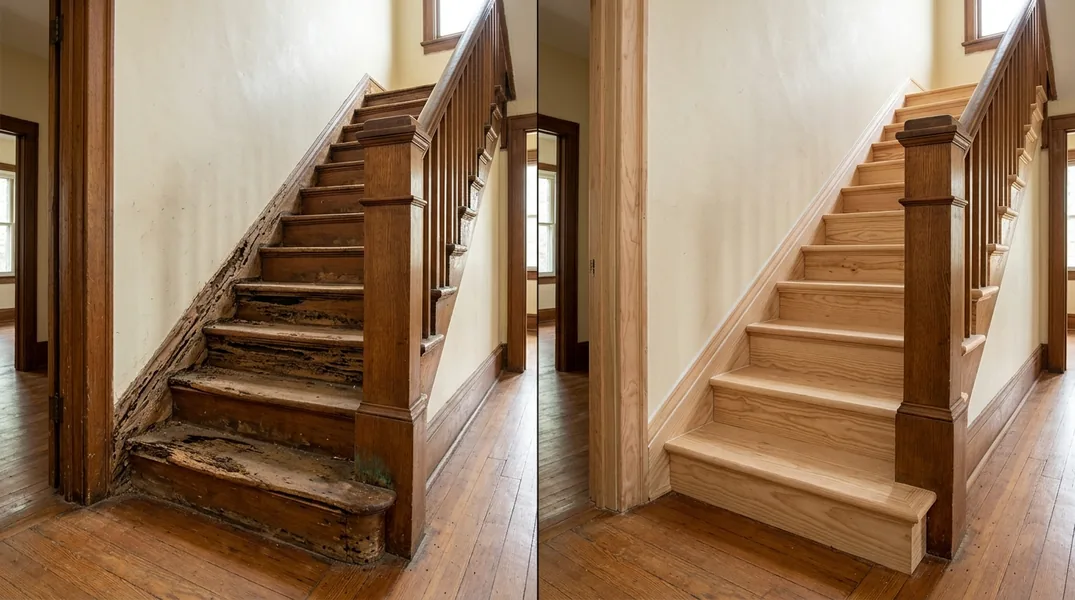
The local stock here includes bay windows, compact floor plans, and original trim worth preserving or matching rather than replacing. We install interior doors, exterior and entry doors, crown molding and baseboard, cabinets and vanities, custom built-ins and shelving, and repair stairs and railings. Each job is an opportunity to understand the house and add to it thoughtfully.
Permits, Repair-or-Replace & What We Do Not Do
Permits and repair decisions go hand in hand. A permit is commonly required for structural work such as removing or altering a load-bearing wall, replacing beams or joists, and modifying stairs or exterior decks, but requirements and thresholds vary by jurisdiction. We recommend that you contact the Chattanooga building department before starting any structural project to verify what applies to your work. When you are deciding whether to repair or replace a damaged member, the actual criteria are straightforward: how much sound wood is left, whether the water source can be closed, and what the two options cost. We quote both when both are realistic, and we explain the trade-off plainly.
We are fully insured and can help you document damage for an insurance claim, though we cannot promise coverage or speak for your policy. On pest treatment and mold remediation, we stay in our lane: we repair and replace wood damaged by rot and insects, but we do not perform pest control, fumigation, chemical treatment, or mold remediation, which are separate regulated trades. Requirements vary across different projects and jurisdictions, and they change. Always verify with the Chattanooga building department before starting your project. For an estimate or to discuss your carpentry needs, contact us or call (423) 395-1695.