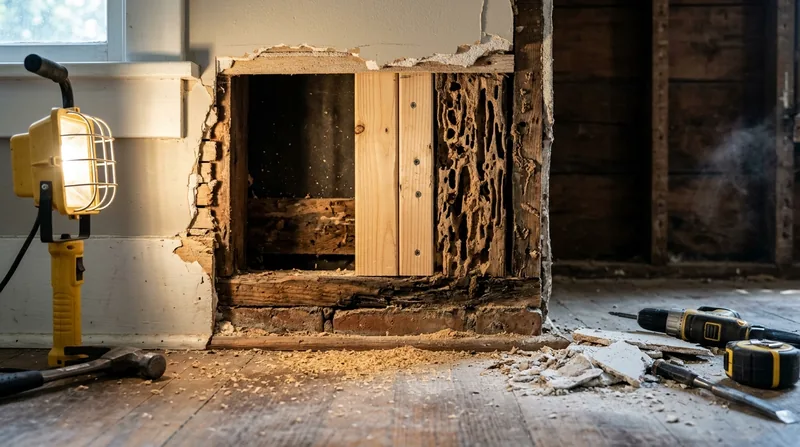




Eastern subterranean termites swarm across the Chattanooga area every spring, and the damage they leave behind doesn't disappear when the exterminator finishes. Older homes in Fort Wood, St. Elmo, Highland Park, and North Chattanooga, built over damp crawlspaces in this river-valley climate, take the hardest hit. After your pest inspection report confirms the infestation, the real work begins: we replace termite-eaten studs, sill plates, subfloor sections, and exterior trim, restoring full structural integrity to the wood frame. Termite damage repair in Chattanooga is not cosmetic; it addresses the wood that holds your house up. We work from your pest inspector's report, replace only the wood that termites have compromised, and rebuild it to code. Call us at (423) 395-1695 for a free estimate, or visit our contact page to request one online.
Why Termite Damage Matters in Chattanooga's Older Homes
The Chattanooga area sits in a bend of the Tennessee River between ridges, on red clay over limestone, with most older homes standing over poorly vented crawlspaces. This combination of high humidity, heavy rainfall spread through the year, and river-valley fog creates ideal conditions for Eastern subterranean termites. Every spring, they swarm and tunnel into sills, floor joists, and rim joists, eating the wood from the inside out. By the time you see mud tubes or soft spots in the subfloor, significant structural damage has already begun.
- We remove termite-damaged studs and sill plates, replacing them with pressure-treated lumber rated for ground contact.
- We rebuild compromised floor joists and subfloor sections, sistering new joists alongside damaged ones or replacing entire sections where the wood is too far gone.
- We repair or replace exterior trim, fascia, and sill trim that termites have hollowed out, using rot-resistant wood species.
- We restore structural integrity to crawlspace framing, ensuring the foundation and floor system work as a unified, load-bearing assembly.
Addressing termite damage promptly prevents further settlement, floor sag, and accelerated decay in adjacent wood.
Key info: Homes in Chattanooga, East Ridge, Signal Mountain, and Lookout Mountain over crawlspaces are at highest risk. The hot, humid summers and spring rains keep wood moisture levels ideal for termite activity. Bring your pest inspection report to the estimate, and we'll tell you exactly what wood needs to come out and what can stay.
For more on wood damage assessment and repair, see our wood rot and dry rot repair service.
How We Handle Termite Damage Repair in Chattanooga
We start with your pest inspection report, which identifies where termites have been active and what wood they've damaged. We do not treat or eliminate the infestation, that is your pest control contractor's job. Our role is to replace the wood they've eaten and restore the structure. We assess each damaged member, decide whether it can be repaired or must be replaced, and execute the work to code.
- We inspect the damaged wood in person, probing soft spots, checking joist bearing, and photographing the extent of the damage.
- We develop a repair plan based on the damage pattern, load-bearing requirements, and whether the wood can be saved or must be replaced.
- We remove termite-eaten wood carefully, exposing the full extent of the damage and ensuring no soft wood remains in the structure.
- We sister new joists or studs alongside damaged members when possible, or replace entire sections when the wood is too compromised.
- We use pressure-treated lumber for all new framing in crawlspaces and sill plates, rated for ground contact and termite resistance.
- We restore exterior trim, fascia, and sill casing with rot-resistant wood, properly sealed and flashed to shed water.
The timeline depends on the scope, but most single-joist repairs take 1 to 3 days, and larger subfloor replacements take a week or more.
Local example: A 1920s Craftsman bungalow in North Chattanooga over a brick pier crawlspace had termites in the rim joist and two floor joists. We removed the damaged rim joist and sistered two new pressure-treated joists, then replaced the subfloor over the affected area. The work took 4 days, and the floor is now level and solid. See our floor joist and subfloor repair service for more examples.
Termite Damage Repair Methods and Approaches
| Approach | Description | Best for |
|---|---|---|
| Sistering | New pressure-treated joist or stud bolted alongside the damaged member, sharing the load. | Partial termite damage where the wood still has some strength and bearing is good. |
| Full Joist or Stud Replacement | Remove the damaged member entirely and install a new pressure-treated joist or stud, properly seated and fastened. | Extensive termite damage where more than 30 percent of the wood is compromised or bearing is compromised. |
| Subfloor Patching | Remove the damaged subfloor section and install new 3/4 inch pressure-treated plywood, fastened to the joists below. | Localized termite damage in the subfloor over a limited area, typically 4 by 8 feet or less. |
| Sill Plate and Rim Joist Replacement | Remove the compromised sill plate or rim joist and install new pressure-treated lumber, ensuring proper flashing and drainage. | Termite damage at the crawlspace rim or perimeter, where moisture and termite entry are high risk. |
| Exterior Trim and Fascia Replacement | Remove rotted fascia, soffit, or sill casing and install new rot-resistant wood, properly sealed and flashed. | Termite or moisture damage in exposed trim, where the damage is visible and affects appearance and weathertightness. |
Termite Damage Repair Cost in Chattanooga: What to Expect
Termite damage repair costs depend on the extent of the damage, the wood that needs replacement, and whether the repair is structural or cosmetic. A single damaged floor joist or rim joist repair typically runs from $1,200 to $2,500. Larger subfloor replacements or multiple-joist jobs can run $3,000 to $8,000 or more. The best way to know your cost is to get a free in-person estimate and see exactly what wood is damaged and what the repair requires.
Factors that move the price include the number of joists or studs affected, the size of the subfloor section to replace, accessibility in the crawlspace, and whether exterior trim or sill plates are involved. A home in Soddy-Daisy with termites in a single joist and a small subfloor patch will cost less than a Victorian in Fort Wood with damage across multiple joists and compromised sill plates. Get 2 to 3 estimates so you can compare scope and price fairly.
For detailed pricing on all our services, visit our pricing page.
Termite Damage Repair Near Me: What Chattanooga Homeowners Should Know When Hiring a Carpenter
When you're looking for a carpenter to repair termite damage in Chattanooga, East Ridge, Red Bank, Signal Mountain, or Collegedale, focus on three things: the carpenter's experience with structural wood repair, whether they understand local building codes and permit requirements, and whether they stand behind their work. Ask for references from past termite or wood damage jobs, and call them. Check that the carpenter is fully insured and can provide proof of coverage before they start work.
Get multiple estimates so you can compare the scope of work, the wood species proposed, and the price. A good estimate will specify which joists or studs are being replaced, what pressure-treated lumber will be used, and what the repair timeline is. Ask about any permits required for structural work, and confirm that your carpenter knows the local building department's rules. If you have an HOA or live in a historic district like Fort Wood or St. Elmo, check whether there are restrictions on materials or methods before work begins.
Call us at (423) 395-1695 or visit our contact page to request a free, no-obligation estimate. We'll assess the damage in person, explain what needs to happen, and give you a clear price before we start.
Termite Damage Repair in Chattanooga: Pricing Guide
| Service | Price | Details |
|---|---|---|
| Single joist or stud repair (sistering or replacement) | Starting at $1,200 | One damaged floor joist or stud replaced or sistered, includes removal of damaged wood and new pressure-treated lumber |
| Subfloor patching (up to 100 sq ft) | Starting at $1,800 | Termite-damaged subfloor section removed and replaced with new pressure-treated plywood, fastened to existing joists |
| Rim joist or sill plate replacement | Starting at $2,500 | Compromised rim joist or sill plate removed and replaced with pressure-treated lumber, including flashing and drainage restoration |
| Multiple joist or large subfloor replacement | On estimate | Extensive termite damage across multiple joists or subfloor areas requires on-site assessment to determine full scope and material costs |
| Travel and estimate | Free | No charge for in-person inspection and estimate, response within 24 hours, valid throughout Chattanooga and surrounding service areas |
Indicative pricing, the exact cost depends on square footage, finish, and site access. Free personalized estimate within 24h at (423) 395-1695.


