Why Homeowners Confuse Dry Rot and Termite Damage
If you've discovered soft, crumbling wood in your Chattanooga home, you might be wondering: is this dry rot or termite damage? Both problems can devastate your home's structural integrity, but they require completely different treatment approaches. Understanding the difference between these two wood-destroying issues is the first step toward protecting your property and your wallet.
The confusion is understandable. Both dry rot and termite damage result in weakened, compromised wood. Both can spread silently through your home for months or even years before you notice anything wrong. Both thrive in moist environments. But the causes, progression patterns, and repair methods are fundamentally different. Misidentifying the problem could lead you to spend money on the wrong solution while the real threat continues to damage your home.
That's why we've put together this comprehensive guide. By learning what does wood rot look like and recognizing the telltale signs of termite damage in wood, you'll be better equipped to protect your investment and know when to call in the professionals at Chattanooga Carpentry.
What Does Wood Rot Look Like? Identifying Dry Rot in Your Home
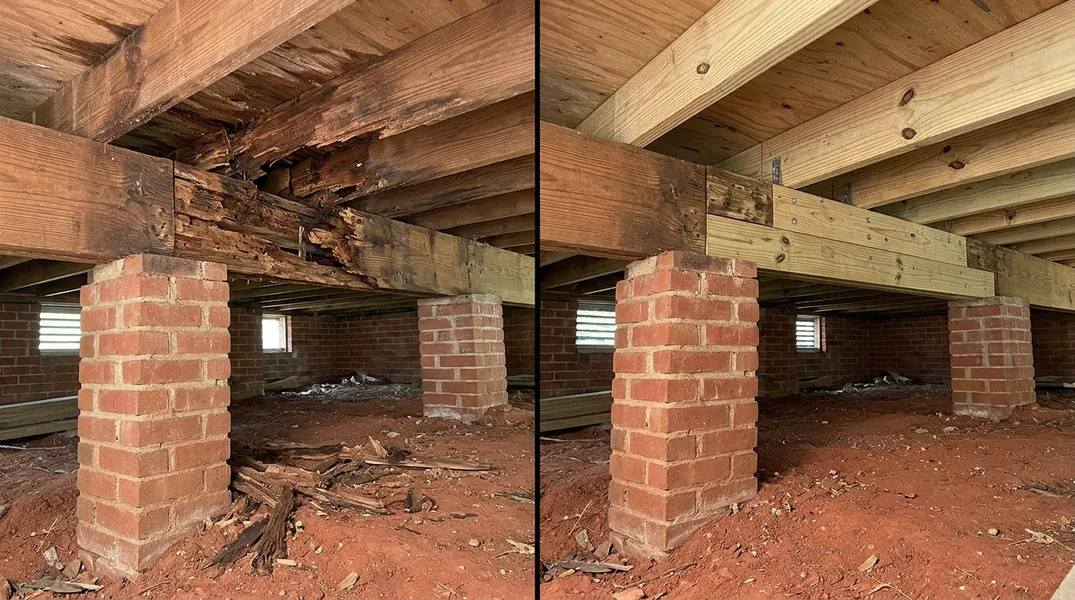
Dry rot is a fungal decay that breaks down the cellulose in wood, causing it to lose strength and structural integrity. Despite its name, dry rot actually requires moisture to develop, though it can spread through wood even after the initial moisture source is removed. What does wood rot look like? The answer depends on the stage of decay, but there are several distinctive visual clues.
In its early stages, dry rot often appears as discoloration or staining on wood surfaces. You might notice brown, orange, or grey streaks running through the grain. As the rot progresses, the wood becomes increasingly soft and crumbly, almost like balsa wood or cork. If you press a screwdriver or awl into affected wood, it will sink in easily without much resistance. The wood may also develop a distinctive musty, earthy smell. Advanced dry rot creates a pattern of deep cracks and cubes in the wood, where the material has shrunk and splintered into small rectangular sections. This cubical cracking is one of the most reliable indicators of advanced dry rot.
Dry rot also produces visible fungal growth. You might see white or grey cottony mycelium spreading across wood surfaces or fruiting bodies that look like pancakes or shelves. These fruiting bodies are often orange, brown, or rust-colored and release millions of spores that can spread the problem to other areas of your home. If you notice any of these signs in your Chattanooga home, it's time to consider Wood Rot & Dry Rot Repair.
Signs of Termite Damage in Wood: What to Look For
Termite damage tells a very different story than dry rot. Termites are insects that tunnel through wood, eating the cellulose as they go. Unlike dry rot, which causes the wood to crumble and weaken uniformly, termites create hollow galleries and tunnels within the wood structure. The surface may appear relatively normal while the interior is completely hollowed out. This is why termite damage is often called the 'silent destroyer' - your wood can look fine on the outside while being devastated on the inside.
The signs of termite damage in wood include visible mud tubes along foundation walls, wooden beams, or crawl space supports. These pencil-thin tubes are highways that termites use to travel between their colony and their food source. You may also notice wood that sounds hollow when tapped with a screwdriver or awl. Termite-damaged wood often has a papery or cardboard-like texture and may have visible galleries or tunnels if you break open the surface. Unlike dry rot's crumbly appearance, termite damage typically leaves wood that appears more intact on the surface but collapses when pressure is applied.
Another key difference: termites often leave behind droppings that look like tiny pellets or sawdust. These droppings are called frass and are typically darker than the wood itself. You might find piles of this material near infested wood or below entry points. Termites also produce wings when they swarm, typically in spring. Finding discarded wings near wood structures or windowsills is a strong indicator of active termite activity. If you suspect termite damage, professional Termite Damage Repair should be your next step.
Dry Rot vs Termite Damage: Key Differences at a Glance
Understanding the core differences between these two problems helps you identify which threat you're facing. Dry rot is caused by fungal spores that require moisture to grow. It spreads through wood via fungal networks and can actually continue spreading even after the moisture source is removed, as long as the wood retains enough dampness. Termite damage, on the other hand, is caused by living insects that must actively tunnel and feed. Termites need to maintain contact with soil or moisture sources and will stop feeding if their colony is eliminated or their access is cut off.
The damage patterns differ significantly as well. Dry rot creates a soft, crumbly, cubically-cracked appearance with visible fungal growth and discoloration. The decay is often concentrated in specific areas where moisture has been present. Termite damage creates hollow galleries and tunnels, with wood that may appear intact on the surface but is hollowed out inside. Termites leave mud tubes, droppings, and often create a more uniform pattern of damage as they systematically tunnel through structural elements. Dry rot smells musty and earthy; termite-infested wood may smell slightly sweet or have a faint wood-destroying insect odor.
The treatment approaches are completely different. Dry rot requires removing the damaged wood and addressing the moisture source that allowed it to develop. Termite damage requires professional pest elimination followed by structural repairs. In some cases, Floor Joist & Subfloor Repair or even Beam Replacement & Load-Bearing Wall Removal may be necessary if the damage is extensive. Misidentifying the problem means you could treat for termites when you actually have dry rot, or ignore a termite infestation while addressing moisture issues that won't solve the real problem.
How Moisture and Environmental Factors Play a Role
Both dry rot and termite damage are more common in homes with moisture problems, which is why the humid climate in Chattanooga can create ideal conditions for both issues. However, they respond differently to moisture. Dry rot requires active moisture to spread. Areas with poor drainage, leaking roofs, plumbing problems, or inadequate ventilation create the perfect environment for fungal growth. Once you eliminate the moisture source, dry rot will stop spreading, though you'll still need to remove the damaged wood.
Termites also prefer moist environments, but they don't require active moisture to survive. They maintain moisture within their colonies and mud tubes. Even in relatively dry wood, termites can persist and continue feeding as long as they have access to soil moisture. This is why termite infestations can continue spreading even in homes without obvious moisture problems. A termite colony can remain active and destructive for years if left untreated, whereas dry rot will eventually stall if moisture is controlled.
Understanding these environmental factors is crucial for prevention. Keeping your home dry, ensuring proper drainage around your foundation, fixing leaks promptly, and maintaining adequate ventilation in crawl spaces and attics will help prevent both problems. Regular inspections of vulnerable areas like basements, crawl spaces, and wood-to-soil contact points can catch either problem in its early stages when repairs are less extensive and less expensive.
When to Call a Professional for Wood Rot & Dry Rot Repair Near Me
If you've identified what you believe is dry rot or termite damage in your home, professional assessment is essential. While minor surface discoloration might be cosmetic, any structural wood damage requires expert evaluation and repair. Attempting to address wood rot or termite damage on your own can lead to incomplete repairs, missed damage, and ongoing structural deterioration. The stakes are simply too high when it comes to your home's integrity.
At Chattanooga Carpentry, we have the expertise to accurately diagnose whether you're dealing with dry rot, termite damage, or another wood problem entirely. Our team can assess the extent of damage, determine whether structural elements like floor joists or beams have been compromised, and recommend the most effective repair strategy. We'll also help you identify and address the underlying cause, whether that's a moisture problem, termite infestation, or both. Getting a professional opinion protects your investment and ensures the problem is solved correctly the first time.
Don't wait if you suspect wood damage. The longer you delay, the more extensive and expensive the repairs become. Contact us today at (423) 395-1695 or request a free estimate to have your home evaluated by experienced professionals. We serve Chattanooga and surrounding areas, and we're ready to help you protect your home.
Looking for a professional carpentry contractor in Chattanooga? Chattanooga Carpentry responds fast for all your carpentry needs.
Get a Free QuoteOur services: Wood Rot & Dry Rot Repair · Termite Damage Repair · Floor Joist & Subfloor Repair