Why Historic Homes in St. Elmo and Highland Park Demand Special Care
If you own a Victorian or craftsman bungalow in Chattanooga, you've inherited something truly special. These neighborhoods are architectural treasures, filled with homes built over a century ago when craftsmanship meant something. But that heritage comes with responsibility. The original materials, construction methods, and exposure to our humid Tennessee climate create unique challenges that modern homes simply don't face.
Historic homes were built to last, and many have proven it. However, wood components that have stood for 80, 100, or even 150 years are not immune to deterioration. The combination of moisture, temperature fluctuations, and age means that wood siding, joists, beams, and structural elements gradually weaken. Without proper maintenance and timely repairs, problems that start small can cascade into major structural issues that threaten the integrity of your entire home.
The good news is that understanding these challenges puts you ahead of most homeowners. By learning what to look for and when to call in professionals, you can preserve your home's character while ensuring it remains safe and sound for generations to come.
Understanding Wood Rot and Dry Rot in Older Homes
Wood Rot & Dry Rot Repair is one of the most common issues we address in historic Chattanooga homes. While the terms are often used interchangeably, they're actually different problems requiring different solutions. Wood rot, also called wet rot, develops when wood moisture content exceeds about 20 percent. This happens in areas exposed to rain, poor drainage, or plumbing leaks. Dry rot, despite its name, also requires moisture to develop, but it spreads more aggressively through wood and can affect areas that seem relatively dry.
In Victorian and craftsman homes, wood rot typically appears in foundation sills, window frames, door jambs, and exterior siding that hasn't been properly sealed or maintained. The wood becomes soft, discolored, and eventually crumbles. You might notice a musty smell or see paint bubbling and peeling. Dry rot can be even more insidious because it spreads through wood fibers and can travel into areas you can't immediately see, potentially compromising structural beams and floor systems before you realize there's a problem.
The humid subtropical climate of Chattanooga actually accelerates these processes. Our summers are warm and wet, creating ideal conditions for fungal growth. Older homes with aging roofs, compromised caulking, or poor gutter systems are especially vulnerable. The longer you wait to address rot, the more expensive and invasive the repair becomes.
Wood Siding Repair: Protecting Your Home's First Line of Defense
Your home's exterior siding is its primary defense against moisture and weather damage. In historic homes, this often means original wood siding that has absorbed decades of weather. Wood siding repair isn't just cosmetic. When siding deteriorates, water penetrates behind it, reaching the sheathing, framing, and insulation inside your walls. This is how rot spreads from the outside in, eventually threatening structural integrity.
Victorian homes often feature intricate trim details and varied siding styles that require specialized knowledge to repair authentically. Craftsman bungalows typically have wider boards and distinctive siding patterns that define their character. When damage occurs, replacing these elements with modern materials that don't match the original can diminish your home's historic value and appeal. That's why working with someone experienced in historic home repair is crucial. They understand how to source materials that match the original, maintain proper water shedding, and preserve the architectural integrity of your home.
Common siding issues include rotted boards, failed caulking, peeling paint that's exposing bare wood, and gaps between boards that allow water infiltration. Regular inspection, especially after heavy rain or storms, helps catch these problems early. Addressing damaged siding promptly prevents the need for more extensive repairs to the structural elements behind it.
Structural Concerns: When Wood Rot Becomes a Safety Issue
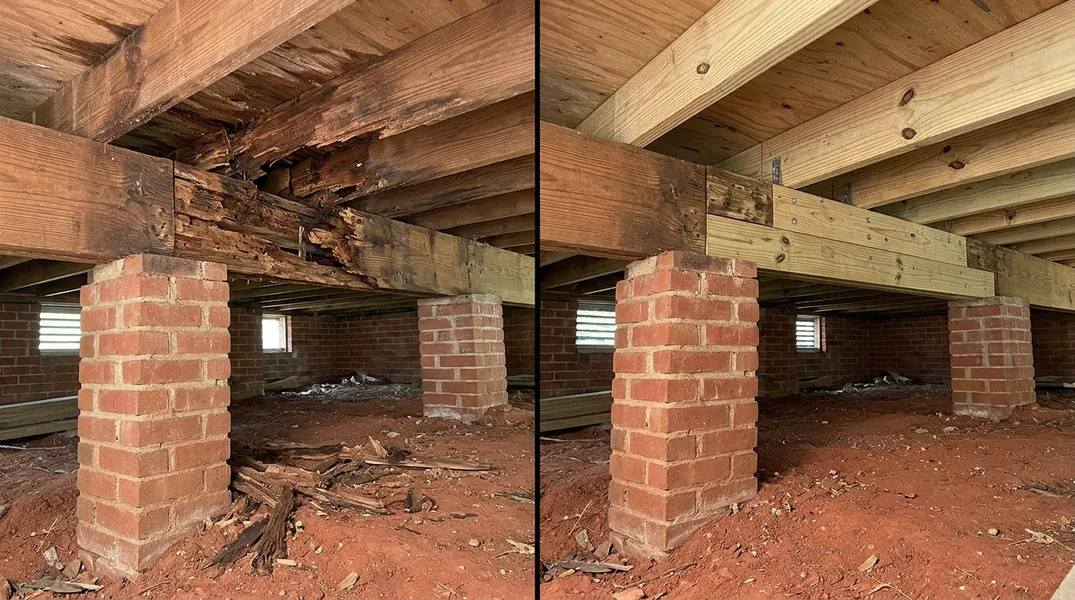
Not all wood rot is created equal. Surface-level rot in trim or siding is one thing. Rot in structural components like floor joists, beams, or load-bearing walls is something else entirely. This is where a casual maintenance issue becomes a genuine safety concern. Floor Joist & Subfloor Repair and Beam Replacement & Load-Bearing Wall Removal are serious undertakings that require professional assessment and engineering-grade solutions.
Signs of structural wood damage include sagging floors, doors and windows that no longer close properly, visible cracks in plaster or drywall, or a spongy feeling underfoot. These symptoms suggest that the wood supporting your home has weakened to the point where it can no longer carry loads safely. In older homes, this often traces back to chronic moisture issues in the basement or crawl space, failed foundation drainage, or leaking roofs that went unrepaired for years.
The challenge with historic homes is that many were built with large timbers that, while beautiful and strong, can hide extensive rot inside while appearing sound on the outside. A professional inspection using modern diagnostic tools can reveal what your eyes cannot see. If structural rot is found, repairs might involve sistering new beams alongside compromised ones, replacing sections of joists, or installing temporary support while permanent repairs are made. These are not DIY projects. They require proper engineering, permits, and skilled carpentry to ensure your home remains safe and level.
Historic Home Maintenance: Prevention Is Your Best Investment
The most cost-effective approach to protecting your historic home is preventing problems before they start. This means establishing a regular maintenance routine and addressing small issues before they become large ones. For Victorian and craftsman homes, this includes keeping gutters clean and functional, ensuring downspouts direct water at least four feet away from the foundation, maintaining proper grading around your home so water doesn't pool near the siding, and keeping caulking and weatherstripping in good condition.
Inspect your roof regularly, especially after storms. Look for missing or damaged shingles, and address them promptly. Check basement and crawl space walls for signs of moisture intrusion, efflorescence (white powdery deposits), or standing water. Ensure your home has adequate ventilation to prevent moisture buildup inside walls. If you have a basement, consider installing a sump pump or improving drainage if you notice dampness. These preventive measures cost far less than dealing with structural rot later.
Many historic homeowners also benefit from working with a professional who understands the specific vulnerabilities of their home type and age. Getting a detailed inspection and maintenance plan tailored to your property helps you prioritize spending and avoid surprises. Whether you're in St. Elmo, Highland Park, or elsewhere in Chattanooga, a professional can identify which systems and components are most at risk and recommend a maintenance schedule that keeps your home in good condition for decades to come.
Getting Help: When to Call a Professional Near Me
Knowing when to call in professional help is essential for historic homeowners. If you notice soft spots in siding or floors, visible rot, persistent moisture problems, or structural issues like sagging or cracking, don't wait. These problems worsen over time and become exponentially more expensive to fix. A professional inspection can determine whether you're dealing with surface damage or something more serious, and what the best repair approach is.
When you contact a carpentry professional, be prepared to describe what you've observed and when you first noticed it. Photos are helpful. A good contractor will visit your home, perform a thorough inspection, and provide a detailed assessment of what needs attention. They should explain the scope of work, timeline, and pricing clearly so you can make an informed decision. For complex structural issues, they may recommend bringing in an engineer to assess load-bearing capacity and design proper repairs.
If you're a homeowner in Chattanooga with concerns about wood rot, siding damage, or structural integrity, Chattanooga Carpentry is here to help. We specialize in historic home repairs and understand the unique challenges of Victorian and craftsman properties. Call us at (423) 395-1695 or visit our website to request a free estimate. Let's work together to preserve your home's character while ensuring it's safe, sound, and built to last another century.
Looking for a professional carpentry contractor in Chattanooga? Chattanooga Carpentry responds fast for all your carpentry needs.
Get a Free QuoteOur services: Wood Rot & Dry Rot Repair · Termite Damage Repair · Floor Joist & Subfloor Repair