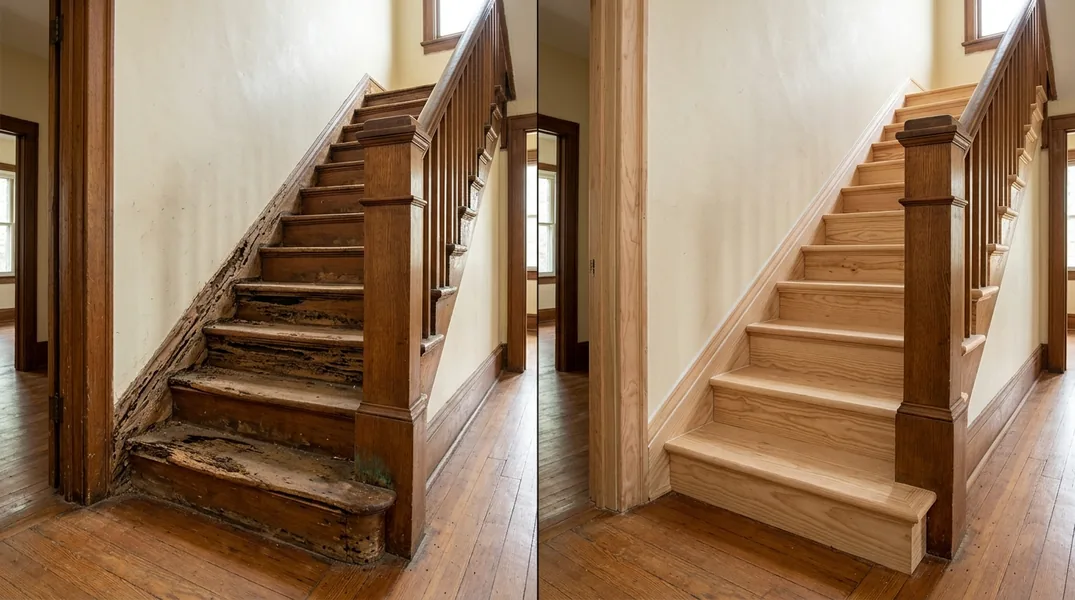
Understanding Wood Rot vs. Termite Damage
When you discover soft, discolored wood on your home, the first question is usually: what caused this? Wood rot and termite damage look similar to untrained eyes, but they require very different treatment approaches. Understanding the difference is crucial to making the right repair decision.
Wood rot occurs when moisture penetrates wood and creates an environment where fungi thrive. The wood becomes soft, spongy, and loses its structural integrity. Dry rot, despite its name, is also caused by moisture and is particularly aggressive because it can spread rapidly through your home. Termite damage, on the other hand, is caused by insects actively eating away at the wood as they tunnel through it. While both conditions weaken wood, the underlying cause determines whether Wood Rot & Dry Rot Repair alone will solve your problem, or if you need Termite Damage Repair combined with pest control intervention.
Homeowners in Chattanooga often discover these issues during seasonal inspections or when they notice structural problems like sagging floors or soft spots in siding. The humid climate in our region creates ideal conditions for both fungal growth and termite activity, making early detection and proper diagnosis essential.
When Can You Repair Rotted Wood Without Replacing It?
The good news is that not every instance of wood rot requires complete replacement. If you catch the problem early and the damage is limited to a small surface area, repair rotted wood without replacing the entire structural member is often possible. Surface-level rot that hasn't penetrated deeply into the wood's core can frequently be addressed by removing the affected portion, treating the area, and applying wood fillers and sealants.
However, the extent of the damage matters significantly. If rot has compromised more than 25 to 30 percent of a structural element like a beam, joist, or wall stud, replacement becomes the safer and more cost-effective option. Attempting to repair severely damaged wood can leave your home vulnerable to further deterioration and potential safety hazards. A professional inspection is the only way to know for certain whether your specific situation qualifies for repair or requires replacement. When you're facing this decision in East Ridge or surrounding areas, having an expert assess the damage removes the guesswork.
For minor rot in non-load-bearing elements like trim, fascia boards, or decorative woodwork, repair is almost always the preferred approach. These areas are easier to access, less critical to your home's structural integrity, and repair costs are significantly lower than replacement.
When Replacement Is the Only Safe Option
Structural wood elements that have experienced significant rot or termite damage must be replaced, not repaired. Load-bearing components like floor joists, main beams, and wall studs are literally holding your home up. Any compromise to their integrity puts your family at risk. If inspection reveals that termites or rot have weakened these critical elements, replacement is non-negotiable for safety and building code compliance.
Similarly, if rot has penetrated deeply into wood or if you're discovering active termite colonies, the damage is typically more extensive than what's visible on the surface. Termites can hollow out wood from the inside while leaving the outer shell seemingly intact. This hidden damage means that what appears to be a small problem may actually require significant structural repair. Floor Joist & Subfloor Repair and Beam Replacement & Load-Bearing Wall Removal are services that demand professional expertise because mistakes can compromise your entire home's structural stability.
Additionally, if you're dealing with rot in areas where moisture will continue to be a problem, repair alone won't solve the underlying issue. You must address the moisture source (roof leaks, foundation drainage problems, poor ventilation) simultaneously. Otherwise, new rot will develop in the repaired wood within months or years. This is why professional contractors always recommend a comprehensive approach that includes both structural repair and moisture remediation.
Replacing Rotted Wood Siding: A Common Chattanooga Problem
One of the most frequently addressed issues we see in Red Bank and throughout the region is rotted siding. Exterior wood siding is constantly exposed to rain, humidity, and temperature fluctuations. When water penetrates paint or stain, it creates the perfect environment for fungal growth. The good news is that replacing rotted wood siding is usually straightforward because siding is non-structural and doesn't require the same engineering considerations as interior framing.
The decision to replace rotted siding typically depends on the extent of the damage and the overall condition of your home's exterior. If only a few boards are affected, replacement of those specific sections is cost-effective. However, if rot is widespread across multiple walls or if the underlying sheathing and framing have been compromised, you may need more extensive work. This is when a professional inspection becomes invaluable. They can determine whether you're looking at a simple siding replacement or if water has penetrated deeper into your home's structure.
When replacing rotted siding, it's also the perfect time to upgrade to more rot-resistant materials or improve the protective barriers underneath. Proper flashing, house wrap, and quality paint or stain can prevent future problems. Many homeowners choose to replace rotted wood siding with materials like fiber cement or composite boards that offer better durability and lower maintenance, though traditional wood can be replaced if you prefer the aesthetic and are willing to maintain it properly.
Wood Rot & Dry Rot Repair Cost in Chattanooga: What to Budget
The cost of addressing rotted or termite-damaged wood varies dramatically depending on the extent of damage, the location within your home, and whether repair or replacement is necessary. A small repair to surface rot on trim might cost $200 to $500, while replacing an entire section of siding could range from $1,500 to $5,000 or more. Structural repairs involving floor joists or beams are significantly more expensive, often ranging from $3,000 to $15,000 or higher depending on the scope of work.
Several factors influence the final pricing. The size of the affected area is primary, but so is accessibility. Damage in crawl spaces or attics costs more to address than damage on easily accessible exterior walls. The type of wood being repaired or replaced, whether you need temporary structural support during repairs, and whether you're also addressing the underlying moisture problem all affect the total cost. Additionally, if termite damage is discovered, you may need to budget separately for pest control treatment before repairs can begin.
Rather than guessing at costs, the best approach is to get a professional assessment. Chattanooga Carpentry offers a free estimate where we evaluate your specific situation and provide detailed pricing based on what's actually needed. You can reach us at (423) 395-1695 to schedule an inspection. This gives you accurate information for budgeting and helps you avoid the false economy of attempting cheap repairs that fail and require replacement anyway.
Signs You Need Professional Help Now
Certain warning signs indicate that wood rot or termite damage requires immediate professional attention. Soft spots that yield to pressure, visible fungal growth or discoloration, a musty odor in your crawl space or basement, buckling or sagging floors, and visible termite tunnels or mud tubes all demand expert evaluation. Don't wait to see if the problem resolves itself. Wood rot and termite damage only worsen over time, and delaying treatment increases costs and risk.
If you notice any of these issues in your Signal Mountain home or anywhere in the greater Chattanooga area, contact Chattanooga Carpentry for a thorough inspection. Our professionals can accurately diagnose the problem, recommend whether repair or replacement is appropriate, and provide honest pricing for the work. Call us at (423) 395-1695 or visit our website to request a free estimate today. Early action protects your home's value and your family's safety.
Looking for a professional carpentry contractor in Chattanooga? Chattanooga Carpentry responds fast for all your carpentry needs.
Get a Free QuoteOur services: Wood Rot & Dry Rot Repair · Termite Damage Repair · Floor Joist & Subfloor Repair