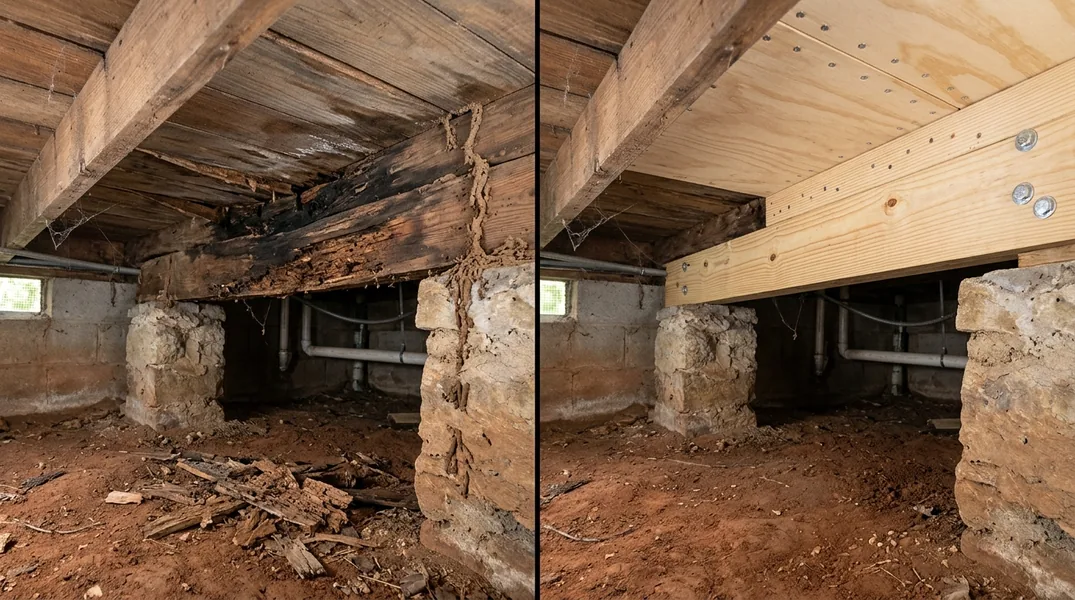
Why Crawlspace Moisture Causes Sagging Floors
If you've noticed your floors dipping or feeling soft underfoot, the culprit is often lurking beneath your home. Crawlspaces in Chattanooga homes are particularly vulnerable to moisture problems because of our region's humid subtropical climate and seasonal rainfall. When moisture accumulates in a crawlspace, it creates the perfect environment for wood deterioration.
Floor joists and subfloors are typically made from wood, which absorbs moisture readily. As wood absorbs water, it swells and weakens structurally. Over time, prolonged exposure to dampness causes the wood fibers to break down, leading to rot and decay. The joists lose their load-bearing capacity, and the floors above begin to sag or bounce. This isn't just an inconvenience; it's a sign that your home's structural integrity is being compromised.
The humidity levels in an uncontrolled crawlspace can easily exceed 70 percent, which is well above the 50-60 percent threshold where wood rot begins to develop. Poor ventilation, standing water, or inadequate vapor barriers all contribute to this moisture accumulation. Many older homes in the Chattanooga area were built with minimal crawlspace protection, making them especially susceptible to this problem.
Common Signs of Floor Joist Damage from Moisture
Homeowners often don't realize they have a crawlspace moisture problem until the floors start showing obvious signs of distress. The most visible indicator is sagging or uneven flooring, particularly near the center of rooms or along exterior walls. You might notice that doors no longer close properly, or that you can see gaps appearing between walls and floors. In some cases, you'll feel a slight bounce or flex when walking across certain areas of the floor.
Beyond the visual signs, there are other clues to watch for. A musty or moldy smell in your home, especially in lower-level rooms, often indicates excessive moisture in the crawlspace below. You may also notice peeling paint, warped baseboards, or staining on subfloors. In advanced cases, you might actually see visible rot or soft, crumbly wood when you peer into the crawlspace. If you also spot insect activity or evidence of Termite Damage Repair needs, the situation is even more urgent, as termites thrive in damp wood.
The key is not to ignore these warning signs. What starts as minor sagging can quickly escalate into serious structural problems that become exponentially more expensive to repair. Early intervention can save you thousands of dollars in the long run.
Floor Joist Repair Options: Sistering and Beyond
Once you've identified damaged floor joists, your repair options depend on the extent of the damage and the underlying moisture problem. The most common repair method is called sistering, where a new pressure-treated joist or reinforcement beam is fastened alongside the damaged joist. This distributes the load between the old and new wood, restoring structural support to your floors. Sistering is often a cost-effective solution when the damage is moderate and the joist still has some structural integrity remaining.
Floor Joist & Subfloor Repair professionals in Chattanooga will assess whether sistering is appropriate for your situation. In cases where the joist is severely compromised or rotted through, full joist replacement may be necessary. This involves removing the damaged joist and installing a new one, which is more labor-intensive but provides a permanent solution. Sometimes, a combination approach works best, where damaged sections are cut out and new wood is spliced in.
The critical step that many homeowners overlook is addressing the moisture source. Even if you repair the damaged joists, if the crawlspace remains damp, new wood will eventually suffer the same fate. This is why professional contractors always recommend installing proper vapor barriers, improving drainage, adding ventilation, or in some cases, installing a dehumidification system in the crawlspace. Treating the root cause is just as important as fixing the visible damage.
The Role of Wood Rot & Dry Rot Repair in Floor Restoration
Wood rot and dry rot are two distinct but related problems that often accompany sagging floors. Wet rot, sometimes called wood rot, develops when wood is exposed to persistent moisture and fungal growth. Dry rot, despite its name, also requires some moisture to begin, but it can spread more aggressively through a structure once established. Both types of rot compromise the structural strength of floor joists and can spread to other wooden components in your home if left untreated.
Professional Wood Rot & Dry Rot Repair involves more than just removing rotted wood. Technicians must identify the extent of the rot, treat any active fungal growth, replace compromised wood with sound material, and eliminate the moisture conditions that allowed the rot to develop in the first place. In some cases, adjacent joists and structural members need to be treated preventatively to stop the rot from spreading. This comprehensive approach ensures that your repair is permanent and that your home won't face the same problem in a few years.
The good news is that modern repair techniques and materials make it possible to restore even significantly damaged floor systems. Pressure-treated lumber, epoxy wood fillers, and advanced moisture control systems have made floor repairs more durable than ever before.
What to Expect During a Professional Floor Joist Repair Near Me
If you contact a professional carpentry company to address sagging floors, here's what the process typically looks like. First, a thorough inspection of your crawlspace will be conducted. The contractor will look for moisture sources, assess the condition of existing joists, check for rot or insect damage, and evaluate the current vapor barrier and ventilation. This inspection is critical because it determines the scope and cost of the repair work ahead.
Once the assessment is complete, you'll receive a detailed estimate outlining the recommended repairs, materials needed, and timeline for completion. The work itself usually begins with moisture control measures, such as installing or upgrading a vapor barrier, improving drainage, or adding ventilation. Next, damaged joists are either sistered, partially replaced, or fully replaced depending on the damage assessment. The crew will carefully support the floor above during this work to ensure safety and minimize disruption to your home.
Throughout the project, a professional contractor will keep you informed of progress and any unexpected issues that arise. Many repairs in crawlspaces can take several days to a week or more, depending on the severity and size of the affected area. Once the work is complete, you should notice an immediate improvement in floor stability and a reduction in musty odors as moisture control measures take effect.
Sagging Floor Repair Cost in Chattanooga: What to Budget
The cost of repairing sagging floors varies widely depending on several factors, including the extent of damage, the number of joists that need repair, local labor rates, and the complexity of moisture control measures required. A simple sistering job on one or two joists might cost between $500 and $1,500, while a more extensive repair involving multiple joists, rot treatment, and crawlspace moisture control could range from $2,000 to $8,000 or more. Full joist replacement in a large area could exceed these estimates significantly.
It's important to get multiple quotes from reputable contractors to understand the pricing in your area. When comparing estimates, make sure you're evaluating the same scope of work. A low bid that doesn't include proper moisture control measures isn't a bargain; it's a short-term fix that will lead to recurring problems. Look for contractors who provide detailed written estimates, warranty information, and evidence of proper licensing and insurance.
Investing in a proper repair now is far more cost-effective than ignoring the problem. Untreated floor damage can lead to additional structural issues, including problems with Beam Replacement & Load-Bearing Wall Removal if the damage spreads to supporting beams. The longer you wait, the more expensive the eventual repair will be.
How to Get Started with a Professional Assessment
If you're concerned about sagging floors or suspect crawlspace moisture problems, the first step is to schedule a professional inspection. Chattanooga Carpentry offers comprehensive evaluations of floor and structural issues, including detailed assessments of crawlspace conditions. During your inspection, our team will identify the root causes of your floor problems and recommend the most effective solutions for your specific situation.
Don't wait until sagging floors become a major safety concern. Contact Chattanooga Carpentry today at (423) 395-1695 to schedule your free estimate. We serve homeowners throughout Chattanooga, East Ridge, Red Bank, Signal Mountain, and surrounding areas. Our experienced carpenters have restored countless homes with structural damage, and we're ready to help restore yours. Visit our website at https://chattanooga-carpentry.com to learn more about our services and see examples of our work.
Looking for a professional carpentry contractor in Chattanooga? Chattanooga Carpentry responds fast for all your carpentry needs.
Get a Free QuoteOur services: Wood Rot & Dry Rot Repair · Termite Damage Repair · Floor Joist & Subfloor Repair